Buy miaxl.com ?
We are moving the project
miaxl.com .
Are you interested in purchasing the domain
miaxl.com ?
domain@kv-gmbh.de · 0541-91531010
Buy miaxl.com ?
Where was Amos preached?
Amos was preached in the ancient kingdom of Israel, during the reign of King Jeroboam II. Amos was a shepherd from Tekoa, a small town in Judah, but he was called by God to prophesy against the injustices and sins of the northern kingdom of Israel. He delivered his messages primarily in the cities of Bethel and Samaria, where he confronted the wealthy and powerful elites for their exploitation of the poor and their disregard for God's laws. **
What did Amos criticize?
Amos criticized the social injustices and moral decay he observed in Israel during his time. He condemned the wealthy elite for exploiting the poor and neglecting their needs. He also denounced the religious leaders for their hypocrisy and lack of genuine faith. Overall, Amos criticized the people of Israel for their failure to live according to the ethical standards set by God. **
Similar search terms for Amos-Valdisole
Top-Angebote
Products related to Amos-Valdisole:
-
'Simposio' ValdisoleThe ‘Simposio’ from the small artisan winery Valdisole is characterized as a red wine with a light and smooth taste, not at all demanding. What contributes to the carefree nature of this wine is the carbonic maceration process used in winemaking, following the tradition of the reds from Beaujolais. In fact, Valdisole's production is guided by the adoption of ancient and modern practices used in various wine regions around the world, such as the oxidative style of Jura wines or, indeed, the carbonic maceration of Gamay from Beaujolais. One essential foundation unites the wines produced by the estate: the fact that only and exclusively grapes are used as ingredients, thus rejecting the use of additives and enological aids. The Valdisole ‘Simposio’ is made with only red grapes grown without the use of pesticides, herbicides, and other synthetic chemical substances, exclusively employing copper and mined sulfur in defense against pests. The harvest is done entirely by hand and the bunches are then vinified in stainless steel tanks.of stainless steel through spontaneous alcoholic fermentation with carbonic maceration. Throughout the entire production process, both filtration and clarification operations as well as the use of additives and enological aids are excluded, except for minimal doses of sulfites, added at bottling if necessary. The ‘Simposio’ from the artisanal reality of Piemonte, Valdisole, has a bright ruby red color. On the nose, pleasant aromas of strawberry, raspberry, lavender, hay, and dried oregano are perceived, with hints of pink pepper providing a background. The tasting is dry and of good complexity, fresh and crisp, with a non-intrusive tannin that contributes to the ease of drinking.19,00 £*Shipping: 48,00 £Secure redirect to the provider
-
'Pnoi' Valdisolerosé through soft pressing and short skin maceration directly in the press. The alcoholic fermentation is entrusted solely to indigenous yeasts and takes place between chestnut barrels and Clayver ceramic barrels, with the final bottling carried out without prior stabilization, clarification, and filtration. The rosé wine ‘Pnoi’ from Valdisole has a delicate powder pink color. The aromatic bouquet releases intriguing scents of red orange, passion fruit, cherry, raspberry, and pear, surrounded by seductive floral and spicy nuances. Fresh taste development, characterized by delicate but persistent tannins, as well as a pleasant softness given by the slight residual sugar, with a finish that recalls faint oxidative memories.rosé through soft pressing and short skin maceration directly in the press. The alcoholic fermentation is entrusted solely to indigenous yeasts and takes place between chestnut barrels and Clayver ceramic barrels, with the final bottling carried out without prior stabilization, clarification, and filtration. The rosé wine ‘Pnoi’ from Valdisole has a delicate powder pink color. The aromatic bouquet releases intriguing scents of red orange, passion fruit, cherry, raspberry, and pear, surrounded by seductive floral and spicy nuances. Fresh taste development, characterized by delicate but persistent tannins, as well as a pleasant softness given by the slight residual sugar, with a finish that recalls faint oxidative memories.29,00 £*Shipping: 48,00 £Secure redirect to the provider
-
'Anarchia' ValdisoleThe orange wine ‘Anarchia’ from the Piedmontese reality of Valdisole is configured as a soft and enveloping interpretation of the type, the result of a peculiar winemaking technique. This bottle was born in 2016, in the second year of experimentation for the winery, free from schemes and constraints, the daughter of a truly “anarchic” oenological vision. In fact, this macerated white wine is produced through a winemaking practice comparable to the Ripasso technique used in Valpolicella, where the wine undergoes a second maceration with pomace from dried grapes. Valdisole ‘Anarchia’ is made from a single white grape variety grown on clay soils according to eco-sustainable practices, excluding the use of synthetic chemical substances. The harvest is carried out late with a percentage of dried grapes on the vine and is followed by the crushing and destemming of the bunches. At this point, spontaneous alcoholic fermentation takes place in large oak barrels, accompanied by about 15 days of maceration on the skins. This is followed by a second long maceration of 5-8 months on the pomace of other dried grapes, according to a technique similar to that used in Valpolicella for Ripasso, capable of giving pronounced softness to the finished wine. The final bottling takes place without prior filtration or clarification. The color of the macerated white wine ‘Anarchia’ from the Valdisole winery is a characteristic garnet yellow with orange reflections. On the nose, vivid and original aromas of apricot, canned peach, citrus peel such as lemon and orange, fig, and raisin emerge. The sip is soft and balanced, with elegant roundness and a delicate tannic sensation that contribute to the great impact of the tasting finish.31,00 £*Shipping: 48,00 £Secure redirect to the provider



-
What would Amos say today?
If Amos were alive today, he would likely continue to speak out against social injustices and inequalities that exist in our world. He would likely criticize the powerful and wealthy for exploiting the poor and marginalized communities. Amos would likely call for a more equitable distribution of resources and opportunities, and advocate for systemic change to address issues such as poverty, racism, and environmental degradation. Overall, Amos would continue to be a voice for the voiceless and challenge society to do better in creating a more just and compassionate world. **
-
What would Amos criticize today?
Amos would likely criticize the growing income inequality and the concentration of wealth in the hands of a few individuals and corporations. He would also likely criticize the exploitation of workers and the lack of concern for the well-being of the most vulnerable in society. Additionally, Amos might criticize the environmental degradation and the disregard for the earth's resources in pursuit of profit. Overall, Amos would likely speak out against the systemic injustices and inequalities that persist in today's society. **
-
What are the accusations of Amos?
Amos accuses the people of Israel of committing various social injustices and moral wrongdoings. He condemns the wealthy for exploiting the poor, for their greed and corruption, and for their lack of compassion and empathy. He also criticizes the people for their empty religious rituals and for neglecting the needs of the marginalized and vulnerable in society. Overall, Amos accuses the people of Israel of failing to live up to the ethical and moral standards set by God. **
-
What are the charges of Amos?
Amos has been charged with multiple counts of theft, fraud, and embezzlement. These charges stem from his alleged involvement in a scheme to siphon funds from his employer's accounts for personal gain. Additionally, Amos is facing charges of conspiracy and money laundering related to the illicit activities. The authorities have gathered substantial evidence against him, including financial records and witness testimonies, to support these charges. **
How did the prophet Amos die?
The Bible does not explicitly state how the prophet Amos died. However, according to tradition, it is believed that he was martyred by being beaten to death. This tradition is based on the account of Amaziah, the priest of Bethel, who ordered Amos to leave and go back to Judah, and then reported him to King Jeroboam II, which ultimately led to his death. Despite the lack of specific details in the Bible, the tradition of Amos's martyrdom has been passed down through the ages. **
Who was the preacher of Amos?
Amos was a shepherd and a fig farmer from the southern kingdom of Judah. He was called by God to be a prophet and preacher, and he delivered his messages primarily to the northern kingdom of Israel during the reign of King Jeroboam II. Amos spoke out against the social injustices and moral corruption of the people, warning them of the impending judgment of God. His preaching emphasized the importance of justice, righteousness, and compassion for the poor and oppressed. **
Top-Angebote
Products related to Amos-Valdisole:
-
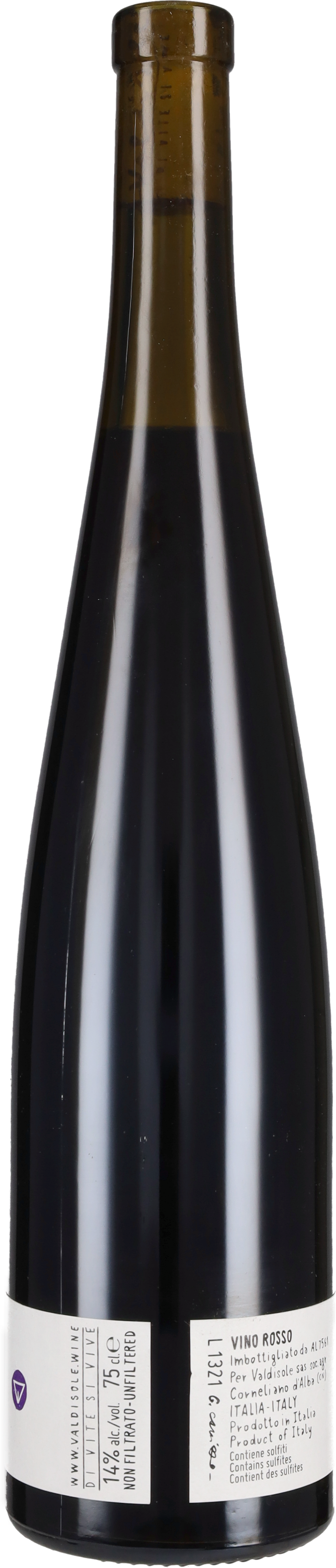
'Amos' ValdisoleThe Piedmontese winery Valdisole introduces the red wine ‘Amos’, a label characterized by irresistible aromas of red fruits and spices. Located in Corneliano d’Alba, in the Roero production area, the artisanal reality of Valdisole is run with genuineness by Giuseppe Amato and Kyriaki Kalimeri, a couple who passionately cultivates traditional varieties of Lower Piedmont, including the indispensable Nebbiolo, an emblematic grape of Roero. The name ‘Amos’ comes from ancient Greek and means “sand”, referring to the characteristic texture of the soils that distinguish the vineyards from which the grapes destined for this bottle come, a matrix that contributes to the finesse and elegance of the wine. The red ‘Amos’ Valdisole originates from a single black grape variety cultivated without the use of pesticides, herbicides, and other synthetic chemical substances. The grapes come from the youngest vineyard of the estate, planted about 20 years ago on calcareous soils rich in sand, characterized by an average sun exposure.In the winery, the hand-harvested clusters undergo the operation of destemming and crushing, followed by the spontaneous alcoholic fermentation of the must in stainless steel tanks associated with about 20 days of contact between the must and the pomace. The wine is finally bottled without undergoing any clarification or filtration and with the only addition of a small quantity of sulfur dioxide. Valdisole ‘Amos’ has a bright ruby red color. The aromas range from notes of red fruits such as cherry and wild strawberry to floral hints of rose petals, all enriched by spicy suggestions of black pepper. The taste development is fresh, direct, and elegant, with a meaty tannic structure that does not preclude the overall great drinkability.29,00 £*Shipping: 48,00 £Secure redirect to the provider
-
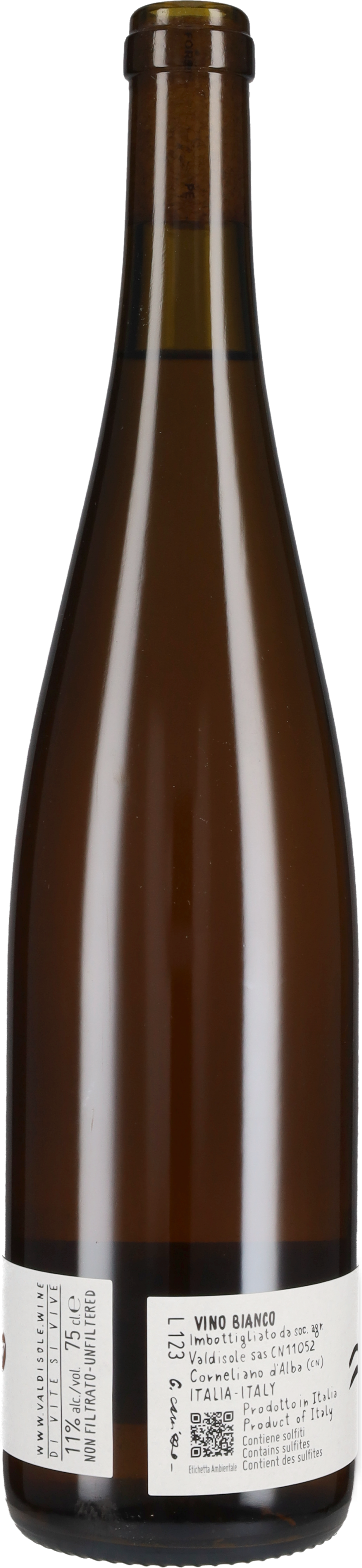
'Armonia' ValdisoleThe white macerated wine ‘Armonia’ produced by the artisanal reality Valdisole is appreciated for its graceful harmony, a quality from which the label derives its name. Behind this bottle lies the desire of Giuseppe Amato and Kyriaki Kalimeri, owners of the Piedmontese winery Valdisole, to produce an orange wine with more delicate and immediate aromas compared to those obtained from very long skin macerations. Following this production philosophy, the couple chose to use acacia barrels for vinification, a type of wood that influences the characteristics of the wine less markedly than the more common oak. Due to this property, acacia is predominantly used in the production of white wines. Valdisole ‘Armonia’ is made from a blend of two white grape varieties, grown in clay, marl, sandy, and calcareous soils according to an environmentally friendly approach, based on the exclusion of synthetic chemical products. The harvest is done by hand and the bunches are then transferred to the winery where they undergo the crushing and destemming operation. This is followed by spontaneous alcoholic fermentation in new 600-liter acacia barrels, associated with 30 days of contact between the must and the skins. The wine is finally bottled without undergoing any clarification or filtration process and with only a minimal amount of added sulfites. Amber yellow, almost pinkish, is the color of the white macerated wine ‘Armonia’ from Valdisole, which on the nose expresses inviting aromas of grapefruit, white flowers, and citrus, surrounded by hints of sage and almond. Fresh and crisp is the entry on the palate, with an agile and smooth drink that contributes to the overall elegance. In the finish, the pleasant citrus and almond notes from the nose reappear.25,00 £*Shipping: 48,00 £Secure redirect to the provider
-
'Simposio' ValdisoleThe ‘Simposio’ from the small artisan winery Valdisole is characterized as a red wine with a light and smooth taste, not at all demanding. What contributes to the carefree nature of this wine is the carbonic maceration process used in winemaking, following the tradition of the reds from Beaujolais. In fact, Valdisole's production is guided by the adoption of ancient and modern practices used in various wine regions around the world, such as the oxidative style of Jura wines or, indeed, the carbonic maceration of Gamay from Beaujolais. One essential foundation unites the wines produced by the estate: the fact that only and exclusively grapes are used as ingredients, thus rejecting the use of additives and enological aids. The Valdisole ‘Simposio’ is made with only red grapes grown without the use of pesticides, herbicides, and other synthetic chemical substances, exclusively employing copper and mined sulfur in defense against pests. The harvest is done entirely by hand and the bunches are then vinified in stainless steel tanks.of stainless steel through spontaneous alcoholic fermentation with carbonic maceration. Throughout the entire production process, both filtration and clarification operations as well as the use of additives and enological aids are excluded, except for minimal doses of sulfites, added at bottling if necessary. The ‘Simposio’ from the artisanal reality of Piemonte, Valdisole, has a bright ruby red color. On the nose, pleasant aromas of strawberry, raspberry, lavender, hay, and dried oregano are perceived, with hints of pink pepper providing a background. The tasting is dry and of good complexity, fresh and crisp, with a non-intrusive tannin that contributes to the ease of drinking.19,00 £*Shipping: 48,00 £Secure redirect to the provider
-
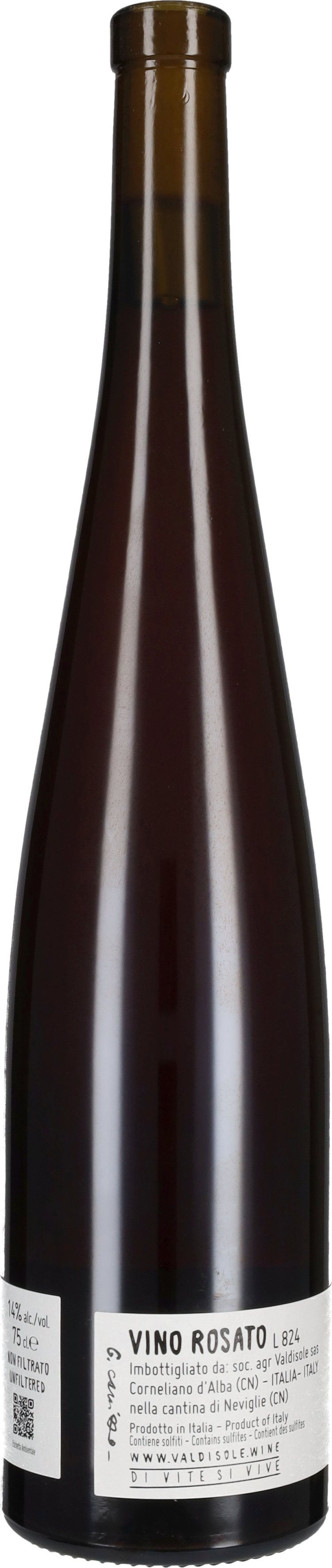
'Pnoi' Valdisolerosé through soft pressing and short skin maceration directly in the press. The alcoholic fermentation is entrusted solely to indigenous yeasts and takes place between chestnut barrels and Clayver ceramic barrels, with the final bottling carried out without prior stabilization, clarification, and filtration. The rosé wine ‘Pnoi’ from Valdisole has a delicate powder pink color. The aromatic bouquet releases intriguing scents of red orange, passion fruit, cherry, raspberry, and pear, surrounded by seductive floral and spicy nuances. Fresh taste development, characterized by delicate but persistent tannins, as well as a pleasant softness given by the slight residual sugar, with a finish that recalls faint oxidative memories.rosé through soft pressing and short skin maceration directly in the press. The alcoholic fermentation is entrusted solely to indigenous yeasts and takes place between chestnut barrels and Clayver ceramic barrels, with the final bottling carried out without prior stabilization, clarification, and filtration. The rosé wine ‘Pnoi’ from Valdisole has a delicate powder pink color. The aromatic bouquet releases intriguing scents of red orange, passion fruit, cherry, raspberry, and pear, surrounded by seductive floral and spicy nuances. Fresh taste development, characterized by delicate but persistent tannins, as well as a pleasant softness given by the slight residual sugar, with a finish that recalls faint oxidative memories.29,00 £*Shipping: 48,00 £Secure redirect to the provider
-
Where was Amos preached?
Amos was preached in the ancient kingdom of Israel, during the reign of King Jeroboam II. Amos was a shepherd from Tekoa, a small town in Judah, but he was called by God to prophesy against the injustices and sins of the northern kingdom of Israel. He delivered his messages primarily in the cities of Bethel and Samaria, where he confronted the wealthy and powerful elites for their exploitation of the poor and their disregard for God's laws. **
-
What did Amos criticize?
Amos criticized the social injustices and moral decay he observed in Israel during his time. He condemned the wealthy elite for exploiting the poor and neglecting their needs. He also denounced the religious leaders for their hypocrisy and lack of genuine faith. Overall, Amos criticized the people of Israel for their failure to live according to the ethical standards set by God. **
-
What would Amos say today?
If Amos were alive today, he would likely continue to speak out against social injustices and inequalities that exist in our world. He would likely criticize the powerful and wealthy for exploiting the poor and marginalized communities. Amos would likely call for a more equitable distribution of resources and opportunities, and advocate for systemic change to address issues such as poverty, racism, and environmental degradation. Overall, Amos would continue to be a voice for the voiceless and challenge society to do better in creating a more just and compassionate world. **
-
What would Amos criticize today?
Amos would likely criticize the growing income inequality and the concentration of wealth in the hands of a few individuals and corporations. He would also likely criticize the exploitation of workers and the lack of concern for the well-being of the most vulnerable in society. Additionally, Amos might criticize the environmental degradation and the disregard for the earth's resources in pursuit of profit. Overall, Amos would likely speak out against the systemic injustices and inequalities that persist in today's society. **
Similar search terms for Amos-Valdisole
-
'Anarchia' ValdisoleThe orange wine ‘Anarchia’ from the Piedmontese reality of Valdisole is configured as a soft and enveloping interpretation of the type, the result of a peculiar winemaking technique. This bottle was born in 2016, in the second year of experimentation for the winery, free from schemes and constraints, the daughter of a truly “anarchic” oenological vision. In fact, this macerated white wine is produced through a winemaking practice comparable to the Ripasso technique used in Valpolicella, where the wine undergoes a second maceration with pomace from dried grapes. Valdisole ‘Anarchia’ is made from a single white grape variety grown on clay soils according to eco-sustainable practices, excluding the use of synthetic chemical substances. The harvest is carried out late with a percentage of dried grapes on the vine and is followed by the crushing and destemming of the bunches. At this point, spontaneous alcoholic fermentation takes place in large oak barrels, accompanied by about 15 days of maceration on the skins. This is followed by a second long maceration of 5-8 months on the pomace of other dried grapes, according to a technique similar to that used in Valpolicella for Ripasso, capable of giving pronounced softness to the finished wine. The final bottling takes place without prior filtration or clarification. The color of the macerated white wine ‘Anarchia’ from the Valdisole winery is a characteristic garnet yellow with orange reflections. On the nose, vivid and original aromas of apricot, canned peach, citrus peel such as lemon and orange, fig, and raisin emerge. The sip is soft and balanced, with elegant roundness and a delicate tannic sensation that contribute to the great impact of the tasting finish.31,00 £*Shipping: 48,00 £Secure redirect to the provider
-
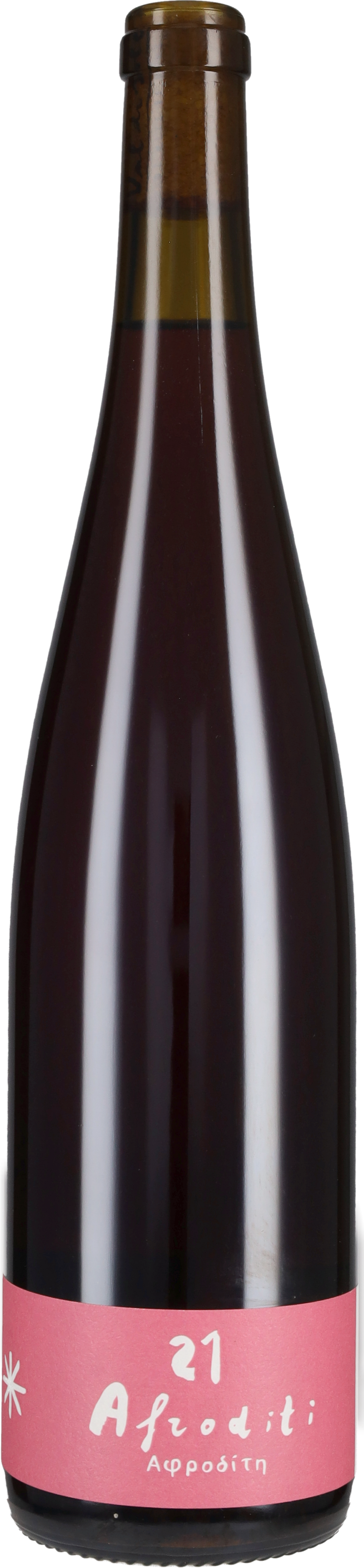
'Afroditi' ValdisoleThe red wine ‘Afroditi’ from the Roero-based Valdisole represents a handcrafted expression with a juicy and dynamic character. At the helm of the winery are Giuseppe Amato and Kyriaki Kalimeri, who officially started their winemaking project in 2015 on the hills of Corneliano d’Alba after purchasing an abandoned Nebbiolo vineyard. The couple, who do not come from a family of winemakers, met in a sommelier course, and from the very beginning, they shared a mutual understanding of the production philosophy, based on respecting the expressive purity of the terroir combined with a highly experimental winemaking spirit. ‘Afroditi’ Valdisole is made with only red grapes grown without the use of synthetic chemical substances, using exclusively mineral sulfur and copper to protect against vine pathogens. After manual harvesting, the bunches are crushed in stainless steel tanks, where spontaneous alcoholic fermentation occurs in contact with the skins. Throughout the production process, no filtration or clarification operations are used, nor are additives and enological aids employed, except for very low doses of sulfites at bottling, when necessary.the entire production process excludes the use of filtration and clarification operations, as well as the use of additives and enological aids, except for very low doses of sulfites at bottling, when necessary. Valdisole ‘Afroditi’ has a lively ruby red color with purple hues. The aromatic range is defined by fruity notes of raspberry and red blueberry that blend with complex hints of cocoa and pink pepper. On the palate, it is dry, fresh and slightly mineral, with a soft tannic texture that contributes to the overall excellent drinkability. Due to its peculiar grace and gustatory dynamism, this artisanal red wine is well-suited to accompany platters of assorted cured meats and cheeses or dishes of not overly structured meat.24,00 £*Shipping: 48,00 £Secure redirect to the provider
-
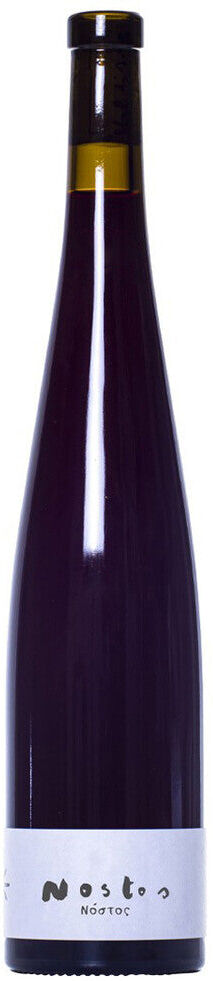
'Nostos' Valdisoleof maceration on the skins in stainless steel tanks. The final bottling is done without prior clarification or filtration and with no or minimal additions of sulfites. In the glass, Valdisole's 'Nostos' expresses a delicate purple-red hue. Pleasant aromas of rose, geranium flower, strawberry jam, and red and black raspberries outline the olfactory spectrum. The progression on the palate is fresh and elegant, with a beautiful aromatic intensity, with well-integrated tannins accompanying the vivid and juicy sensations of berries and flowers in the finish. This is a perfect red wine to pair with platters of medium-aged cheeses and cured meats, or with first and second courses of not overly flavorful meats, such as veal or pork.of maceration on the skins in stainless steel tanks. The final bottling is done without prior clarification or filtration and with no or minimal additions of sulfites. In the glass, Valdisole's 'Nostos' expresses a delicate purple-red hue. Pleasant aromas of rose, geranium flower, strawberry jam, and red and black raspberries outline the olfactory spectrum. The progression on the palate is fresh and elegant, with a beautiful aromatic intensity, with well-integrated tannins accompanying the vivid and juicy sensations of berries and flowers in the finish. This is a perfect red wine to pair with platters of medium-aged cheeses and cured meats, or with first and second courses of not overly flavorful meats, such as veal or pork.23,00 £*Shipping: 48,00 £Secure redirect to the provider
-
What are the accusations of Amos?
Amos accuses the people of Israel of committing various social injustices and moral wrongdoings. He condemns the wealthy for exploiting the poor, for their greed and corruption, and for their lack of compassion and empathy. He also criticizes the people for their empty religious rituals and for neglecting the needs of the marginalized and vulnerable in society. Overall, Amos accuses the people of Israel of failing to live up to the ethical and moral standards set by God. **
-
What are the charges of Amos?
Amos has been charged with multiple counts of theft, fraud, and embezzlement. These charges stem from his alleged involvement in a scheme to siphon funds from his employer's accounts for personal gain. Additionally, Amos is facing charges of conspiracy and money laundering related to the illicit activities. The authorities have gathered substantial evidence against him, including financial records and witness testimonies, to support these charges. **
-
How did the prophet Amos die?
The Bible does not explicitly state how the prophet Amos died. However, according to tradition, it is believed that he was martyred by being beaten to death. This tradition is based on the account of Amaziah, the priest of Bethel, who ordered Amos to leave and go back to Judah, and then reported him to King Jeroboam II, which ultimately led to his death. Despite the lack of specific details in the Bible, the tradition of Amos's martyrdom has been passed down through the ages. **
-
Who was the preacher of Amos?
Amos was a shepherd and a fig farmer from the southern kingdom of Judah. He was called by God to be a prophet and preacher, and he delivered his messages primarily to the northern kingdom of Israel during the reign of King Jeroboam II. Amos spoke out against the social injustices and moral corruption of the people, warning them of the impending judgment of God. His preaching emphasized the importance of justice, righteousness, and compassion for the poor and oppressed. **
* All prices are inclusive of VAT and, if applicable, plus shipping costs. The offer information is based on the details provided by the respective shop and is updated through automated processes. Real-time updates do not occur, so deviations can occur in individual cases. ** Note: Parts of this content were created by AI.