Buy miaxl.com ?
We are moving the project
miaxl.com .
Are you interested in purchasing the domain
miaxl.com ?
domain@kv-gmbh.de · 0541-91531010
Buy miaxl.com ?
What is the Château Clavin Côtes du Rhône 1995?
The Château Clavin Côtes du Rhône 1995 is a red wine from the Côtes du Rhône region in France. It is made from a blend of Grenache, Syrah, and Mourvèdre grapes, and is known for its rich and complex flavors. This vintage is highly regarded for its aging potential, with the 1995 being a particularly good year for the wine. It is often described as having notes of dark fruits, spices, and a smooth, velvety texture. **
What does 'du brunzkache du ogsoachte' mean?
The phrase "du brunzkache du ogsoachte" is in the Bavarian dialect of German and translates to "you're crazy, you're delusional" in English. It is used to express disbelief or to dismiss someone's ideas or actions as irrational or nonsensical. **
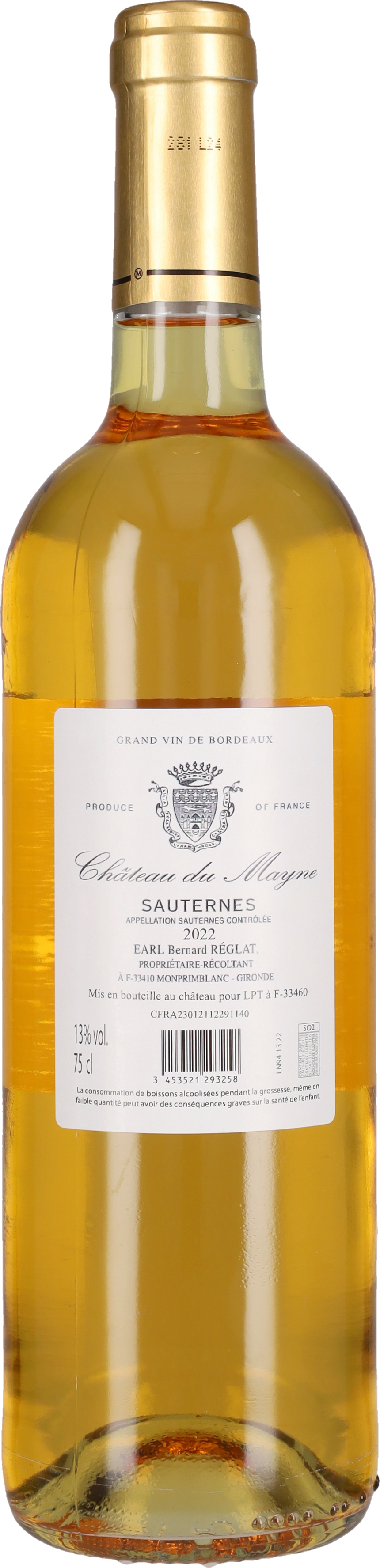

Similar search terms for Château-du-Mayne-Sauternes
Top-Angebote
Products related to Château-du-Mayne-Sauternes:
-
Château d'Arlay Cotes du Jura 'Corail' Chateau d'Arlay 2020for 24 months, after which the wine is deemed ready to be bottled and released into the market. The Cotes du Jura “Corail” is a French red wine that develops in the glass with a light ruby color. The range of aromas that envelops the nose moves on delicate notes, primarily of ripe fruit, which are also enhanced by slight spicier sensations, derived from the time spent in wood maturing. On the palate, it is medium-bodied, refined, with a delicate sip that orchestrates around a slightly spicy dry taste. A label with which Château d’Arlay pays homage to the territorial traditions of French Jura, creating a wine that looks to the past with due respect. for 24 months, after which the wine is deemed ready to be bottled and released into the market. The Cotes du Jura “Corail” is a French red wine that develops in the glass with a light ruby color. The range of aromas that envelops the nose moves on delicate notes, primarily of ripe fruit, which are also enhanced by slight spicier sensations, derived from the time spent in wood maturing. On the palate, it is medium-bodied, refined, with a delicate sip that orchestrates around a slightly spicy dry taste. A label with which Château d’Arlay pays homage to the territorial traditions of French Jura, creating a wine that looks to the past with due respect.35,00 £*Shipping: 48,00 £Secure redirect to the provider
-
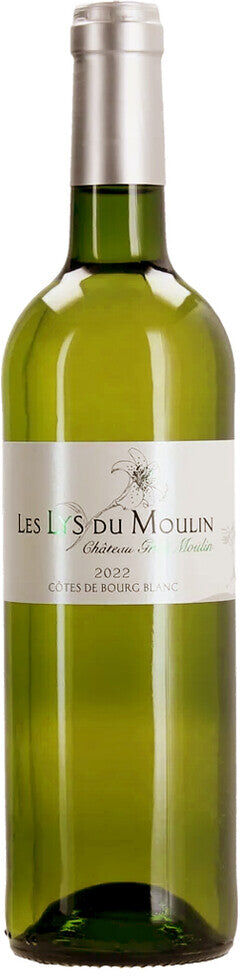
Sauvignon Blanc 'Les Lys du Moulin' Château Gros Moulin 2025The Sauvignon Blanc ‘Les Lys du Moulin’ is a white wine from the Bordeaux wine region that stands out for its aromas of citrus and flowers, produced precisely in the area of Côtes de Bourg by Château Gros Moulin. The territory of Côtes de Bourg is located on the right bank of the Dordogne River, at a height corresponding to the point where the river meets the Garonne to form the Gironde River. In this territory, since as far back as 1757, Château Gros Moulin has been producing high-quality wines. The name ‘Les Lys du Moulin’ means “the lilies of the mill,” a flower also represented on the label. ‘Les Lys du Moulin Côtes de Bourg Chateau Gros Moulin Sauvignon Blanc originates from only grapes of the same variety grown according to sustainable practices on clay and limestone soils of alluvial origin. Following the harvest, the bunches are first carefully selected and then subjected to a gentle pressing, with the must thus obtained undergoing spontaneous alcoholic fermentation in cement tanks.concrete. Once the fermentation process is complete, the wine is aged for 6 months with half of the mass in oak barrels and the remaining part in concrete. In appearance, the Côtes de Bourg Sauvignon Blanc Chateau Gros Moulin ‘Les Lys du Moulin’ displays a pale straw yellow color. Delightful aromas of apricot, lychee, citrus, lily, and lavender present the olfactory range, enriched by pleasant notes of menthol and almond. On the palate, the important softness and roundness are well supported by the lively freshness that defines the juicy and persistent progression, also consistent with its citrus and floral sensations. To enhance the wine's characteristics, it is ideal to serve it at a temperature of 10-12 °C paired with seafood first and second courses or dishes based on asparagus.17,00 £*Shipping: 48,00 £Secure redirect to the provider
-
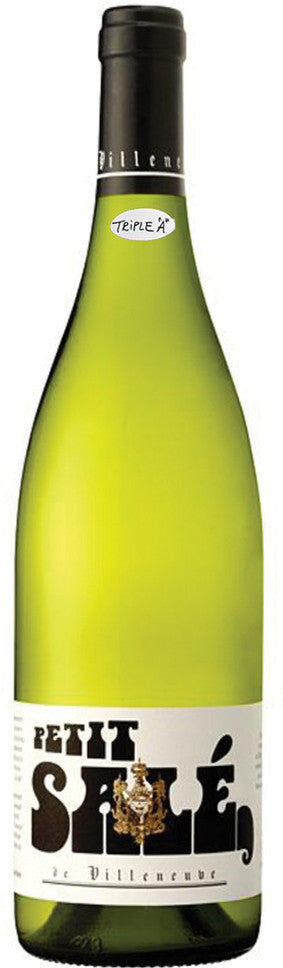
Château de Roquefort Bouches du Rhone Blanches 'Petit Salé' Chateau de Roquefort 2025The Bouches du Rhone Blanches "Petit Salé" from Château de Roquefort is a French white wine from Provence that encapsulates the passion and dedication of Raimond de Villeneauve, the owner who firmly believes in implementing organic viticulture. The vines of Vermentino, Ugni Blanc, and Clairette are old, yielding few grapes during harvest, rich in nuances capable of telling the different souls of the subsoil. A label in which the iodized flavor recalls the territory, reminding us how the vineyards are, in a straight line, not far from the sea. “Petit Salé” Bouches du Rhone Blanches is made by Château de Roquefort from a blend of grape varieties, Clairette, Ugni Blanc, and Vermentino. These varieties grow in vineyards that are also fifty years old, facing northwest and situated at an altitude of about 380 meters above sea level. The subsoil has a clayey, calcareous, and stony composition. The grapes are gently pressed at a temperature of about 5 degrees, and the subsequent fermentationof the must occurs spontaneously, in cement tanks. The final aging lasts for 6 months, during which the wine remains in cement in contact with the fine lees. Once maturation is complete, bottling takes place. The Bouches du Rhone Blanches Château de Roquefort presents itself in the glass with a straw yellow color, interspersed with greener flashes. The nose opens up to a range of citrus aromas, further enriched in the evolution of the olfactory analysis by floral hints; in the finish, an almond note is perceived. On the palate, it is clear and linear, with a sip that reveals a clear fresh and marine vein. A bottle that is excellent at the table with first courses accompanied by vegetable sauces or with fish and shellfish recipes.23,00 £*Shipping: 48,00 £Secure redirect to the provider
-
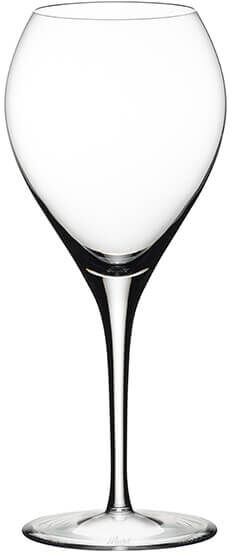
Riedel Sommeliers Sauternes Wine GlassDesigned for sweet and dessert wines, the Riedel Sommeliers Sauternes glass focuses on balance rather than richness alone. Its shape helps emphasise acidity, lifting freshness and minerality to offset sweetness while allowing ripe fruit aromas to come through clearly. With a 340ml capacity, the bowl gives dessert wines enough space to develop without becoming heavy, while the 20cm height keeps the glass well proportioned and comfortable to use. The result is a cleaner, more structured impression on the palate, with sweetness kept in check and the finish feeling lighter and more precise. Handmade from clear crystal, each glass is individually crafted, with subtle variations that reflect its artisanal nature. Part of Riedel’s original Sommeliers collection, the design follows a function‑led approach aimed at presenting the wine at its best. Dishwasher safe and supplied as a single glass.88,00 £*Shipping: 0,00 £Secure redirect to the provider

-
Is it said "Du backst" or "Du bäckst"?
The correct form is "Du backst." The verb "backen" means "to bake" in German, and when conjugated for the second person singular (du), it takes the form "backst." The umlaut (ä) in "bäckst" is incorrect in this context. **
-
Do you say "Du backst" or "Du bäckst"?
The correct spelling is "Du backst." The verb "backen" is conjugated as "backst" in the second person singular form. The umlaut on the letter "a" is not used in this conjugation. **
-
Does it say "Du backst" or "Du bäckst"?
It says "Du backst." The verb "backen" (to bake) is conjugated as "backst" in the second person singular form in the present tense. The form "Du bäckst" would be incorrect in standard German. **
-
Does it say "Du hältst" or "Du hältst"?
It says "Du hältst." **


Why do we say "du hältst" but not "du setzt" instead "du setzt dich"?
In German, the verb "setzen" typically requires a direct object, so when using it in the second person singular form, it is often accompanied by a reflexive pronoun to indicate that the action is being performed on oneself. This is why we say "du setzt dich" instead of just "du setzt." On the other hand, the verb "halten" does not require a direct object, so it can be used on its own without a reflexive pronoun, resulting in "du hältst." This distinction in usage is a characteristic of the German language and its grammar rules. **
What does "Du weißt nicht, was du willst?" mean?
"Du weißt nicht, was du willst?" is a German phrase that translates to "You don't know what you want?" in English. It is often used to express frustration or confusion towards someone who seems indecisive or unsure about their desires or intentions. The phrase can be used in various contexts, such as in relationships, decision-making, or when someone is being wishy-washy about their choices. **
Top-Angebote
Products related to Château-du-Mayne-Sauternes:
-
Château du Mayne Sauternes Château de Mayne 2023The Sauternes from Chateau du Mayne La Merci is a sweet botrytized wine characterized by distinctive aromas of candied fruit and saffron that invite tasting. At the helm of the winery, known until 2016 as Chateau du Mayne, is the Bourjade family, represented by Gilles, the project leader, Brigitte, a skilled taster and communicator, and their daughter Caroline, responsible for the commercial and communication aspects. The three renamed the property Chateau du Mayne La Merci to pay tribute to a series of circumstances interpreted as divine signs. Chateau du Mayne was also the birthplace of Marie Thérèse Charlotte de Lamourous, who lived in the 18th century and founded the Opera of Mercy, declared "venerable" in 1989.Chateau du Mayne La Merci Sauternes is made from a blend of Sémillon (70%), Sauvignon Blanc (20%), and Muscadelle (10%) grapes, sourced from 45-year-old vines cultivated according to organic farming principles on silica- and gravel-rich soils. The harvest is carried out in several passes, selecting clusters affected by noble rot each time, a phenomenon caused by the Botrytis cinerea fungus favored by the area's unique microclimate. The grapes are then vinified white through gentle pressing and subsequent alcoholic fermentation of the must in French oak barrels, 30% of which are new. The wine matures in these barrels for 18–24 months before final bottling.In the glass, Chateau du Mayne La Merci Sauternes reveals a warm golden-yellow hue with intense amber reflections. The aromatic profile is characterized by vivid notes of pineapple jam, candied lemon peel, figs, sweet spices, and saffron. Despite its evident sweetness, the tasting surprises with finesse and verticality, offering a complex and deep progression that concludes with sensations of candied fruit and spices.18,00 £*Shipping: 48,00 £Secure redirect to the provider
-
Château d'Arlay Cotes du Jura 'Corail' Chateau d'Arlay 2020for 24 months, after which the wine is deemed ready to be bottled and released into the market. The Cotes du Jura “Corail” is a French red wine that develops in the glass with a light ruby color. The range of aromas that envelops the nose moves on delicate notes, primarily of ripe fruit, which are also enhanced by slight spicier sensations, derived from the time spent in wood maturing. On the palate, it is medium-bodied, refined, with a delicate sip that orchestrates around a slightly spicy dry taste. A label with which Château d’Arlay pays homage to the territorial traditions of French Jura, creating a wine that looks to the past with due respect. for 24 months, after which the wine is deemed ready to be bottled and released into the market. The Cotes du Jura “Corail” is a French red wine that develops in the glass with a light ruby color. The range of aromas that envelops the nose moves on delicate notes, primarily of ripe fruit, which are also enhanced by slight spicier sensations, derived from the time spent in wood maturing. On the palate, it is medium-bodied, refined, with a delicate sip that orchestrates around a slightly spicy dry taste. A label with which Château d’Arlay pays homage to the territorial traditions of French Jura, creating a wine that looks to the past with due respect.35,00 £*Shipping: 48,00 £Secure redirect to the provider
-
Sauvignon Blanc 'Les Lys du Moulin' Château Gros Moulin 2025The Sauvignon Blanc ‘Les Lys du Moulin’ is a white wine from the Bordeaux wine region that stands out for its aromas of citrus and flowers, produced precisely in the area of Côtes de Bourg by Château Gros Moulin. The territory of Côtes de Bourg is located on the right bank of the Dordogne River, at a height corresponding to the point where the river meets the Garonne to form the Gironde River. In this territory, since as far back as 1757, Château Gros Moulin has been producing high-quality wines. The name ‘Les Lys du Moulin’ means “the lilies of the mill,” a flower also represented on the label. ‘Les Lys du Moulin Côtes de Bourg Chateau Gros Moulin Sauvignon Blanc originates from only grapes of the same variety grown according to sustainable practices on clay and limestone soils of alluvial origin. Following the harvest, the bunches are first carefully selected and then subjected to a gentle pressing, with the must thus obtained undergoing spontaneous alcoholic fermentation in cement tanks.concrete. Once the fermentation process is complete, the wine is aged for 6 months with half of the mass in oak barrels and the remaining part in concrete. In appearance, the Côtes de Bourg Sauvignon Blanc Chateau Gros Moulin ‘Les Lys du Moulin’ displays a pale straw yellow color. Delightful aromas of apricot, lychee, citrus, lily, and lavender present the olfactory range, enriched by pleasant notes of menthol and almond. On the palate, the important softness and roundness are well supported by the lively freshness that defines the juicy and persistent progression, also consistent with its citrus and floral sensations. To enhance the wine's characteristics, it is ideal to serve it at a temperature of 10-12 °C paired with seafood first and second courses or dishes based on asparagus.17,00 £*Shipping: 48,00 £Secure redirect to the provider
-
What is the Château Clavin Côtes du Rhône 1995?
The Château Clavin Côtes du Rhône 1995 is a red wine from the Côtes du Rhône region in France. It is made from a blend of Grenache, Syrah, and Mourvèdre grapes, and is known for its rich and complex flavors. This vintage is highly regarded for its aging potential, with the 1995 being a particularly good year for the wine. It is often described as having notes of dark fruits, spices, and a smooth, velvety texture. **
-
What does 'du brunzkache du ogsoachte' mean?
The phrase "du brunzkache du ogsoachte" is in the Bavarian dialect of German and translates to "you're crazy, you're delusional" in English. It is used to express disbelief or to dismiss someone's ideas or actions as irrational or nonsensical. **
-
Is it said "Du backst" or "Du bäckst"?
The correct form is "Du backst." The verb "backen" means "to bake" in German, and when conjugated for the second person singular (du), it takes the form "backst." The umlaut (ä) in "bäckst" is incorrect in this context. **
-
Do you say "Du backst" or "Du bäckst"?
The correct spelling is "Du backst." The verb "backen" is conjugated as "backst" in the second person singular form. The umlaut on the letter "a" is not used in this conjugation. **
Similar search terms for Château-du-Mayne-Sauternes
-
Château de Roquefort Bouches du Rhone Blanches 'Petit Salé' Chateau de Roquefort 2025The Bouches du Rhone Blanches "Petit Salé" from Château de Roquefort is a French white wine from Provence that encapsulates the passion and dedication of Raimond de Villeneauve, the owner who firmly believes in implementing organic viticulture. The vines of Vermentino, Ugni Blanc, and Clairette are old, yielding few grapes during harvest, rich in nuances capable of telling the different souls of the subsoil. A label in which the iodized flavor recalls the territory, reminding us how the vineyards are, in a straight line, not far from the sea. “Petit Salé” Bouches du Rhone Blanches is made by Château de Roquefort from a blend of grape varieties, Clairette, Ugni Blanc, and Vermentino. These varieties grow in vineyards that are also fifty years old, facing northwest and situated at an altitude of about 380 meters above sea level. The subsoil has a clayey, calcareous, and stony composition. The grapes are gently pressed at a temperature of about 5 degrees, and the subsequent fermentationof the must occurs spontaneously, in cement tanks. The final aging lasts for 6 months, during which the wine remains in cement in contact with the fine lees. Once maturation is complete, bottling takes place. The Bouches du Rhone Blanches Château de Roquefort presents itself in the glass with a straw yellow color, interspersed with greener flashes. The nose opens up to a range of citrus aromas, further enriched in the evolution of the olfactory analysis by floral hints; in the finish, an almond note is perceived. On the palate, it is clear and linear, with a sip that reveals a clear fresh and marine vein. A bottle that is excellent at the table with first courses accompanied by vegetable sauces or with fish and shellfish recipes.23,00 £*Shipping: 48,00 £Secure redirect to the provider
-
Riedel Sommeliers Sauternes Wine GlassDesigned for sweet and dessert wines, the Riedel Sommeliers Sauternes glass focuses on balance rather than richness alone. Its shape helps emphasise acidity, lifting freshness and minerality to offset sweetness while allowing ripe fruit aromas to come through clearly. With a 340ml capacity, the bowl gives dessert wines enough space to develop without becoming heavy, while the 20cm height keeps the glass well proportioned and comfortable to use. The result is a cleaner, more structured impression on the palate, with sweetness kept in check and the finish feeling lighter and more precise. Handmade from clear crystal, each glass is individually crafted, with subtle variations that reflect its artisanal nature. Part of Riedel’s original Sommeliers collection, the design follows a function‑led approach aimed at presenting the wine at its best. Dishwasher safe and supplied as a single glass.88,00 £*Shipping: 0,00 £Secure redirect to the provider
-
Does it say "Du backst" or "Du bäckst"?
It says "Du backst." The verb "backen" (to bake) is conjugated as "backst" in the second person singular form in the present tense. The form "Du bäckst" would be incorrect in standard German. **
-
Does it say "Du hältst" or "Du hältst"?
It says "Du hältst." **
-
Why do we say "du hältst" but not "du setzt" instead "du setzt dich"?
In German, the verb "setzen" typically requires a direct object, so when using it in the second person singular form, it is often accompanied by a reflexive pronoun to indicate that the action is being performed on oneself. This is why we say "du setzt dich" instead of just "du setzt." On the other hand, the verb "halten" does not require a direct object, so it can be used on its own without a reflexive pronoun, resulting in "du hältst." This distinction in usage is a characteristic of the German language and its grammar rules. **
-
What does "Du weißt nicht, was du willst?" mean?
"Du weißt nicht, was du willst?" is a German phrase that translates to "You don't know what you want?" in English. It is often used to express frustration or confusion towards someone who seems indecisive or unsure about their desires or intentions. The phrase can be used in various contexts, such as in relationships, decision-making, or when someone is being wishy-washy about their choices. **
* All prices are inclusive of VAT and, if applicable, plus shipping costs. The offer information is based on the details provided by the respective shop and is updated through automated processes. Real-time updates do not occur, so deviations can occur in individual cases. ** Note: Parts of this content were created by AI.