Buy miaxl.com ?
We are moving the project
miaxl.com .
Are you interested in purchasing the domain
miaxl.com ?
domain@kv-gmbh.de · 0541-91531010
Buy miaxl.com ?
What is the difference between Economies of Scale and Economies of Scope?
Economies of scale refer to the cost advantages that a business can achieve as it increases its level of production. This can result from factors such as spreading fixed costs over a larger output, bulk purchasing discounts, and more efficient use of resources. On the other hand, economies of scope refer to the cost advantages that arise from producing a variety of products or services together, rather than just one. This can result from shared resources, such as marketing and distribution channels, as well as the ability to leverage a company's core competencies across multiple products or services. **
What are the Tiger economies?
The Tiger economies refer to the highly developed and industrialized economies of East Asia, including South Korea, Taiwan, Singapore, and Hong Kong. These countries experienced rapid economic growth and industrialization in the latter half of the 20th century, transforming from agrarian-based economies to industrial powerhouses. The term "Tiger economies" is derived from the "Four Asian Tigers," which originally referred to South Korea, Taiwan, Singapore, and Hong Kong, but has since been expanded to include other rapidly developing economies in the region. These countries are known for their export-oriented growth strategies, strong manufacturing sectors, and high levels of technological innovation. **

Similar search terms for Economies
Top-Angebote
Products related to Economies:
-
Multisell Products Hub Magnetic Bottle Opener For Household Mineral Water Plastic Beverage Bottles And Cap Opening, Kitchen Accessories Gadgets blueEffortless Cap Opening for Everyday Kitchens Upgrade your routine with this 1 pcs Kitchen Accessories Gadgets Magnetic Bottle Opener for Household Mineral Water Plastic Beverage Bottles and Cap Opening designed for convenience and comfort. It makes...34,97 $*Shipping: 0,00 $Secure redirect to the provider
-
HARPERCOLLINS Creative Confidence by Tom & David Kelley – Unleashing Your Creative Potential & Innovation MindsetA powerful and inspiring book from the founders of IDEO, the award-winning design firm, on unleashing the creativity that lies within each and every one of us. Too often, companies and individuals assume that creativity and innovation are the domain of the ‘creative types’. But two of the foremost experts in innovation, design and creativity on the planet show us that each and every one of us is creative. In an entertaining and inspiring narrative that draws on countless stories from their work at IDEO, and with many of the world's top companies and design firms, David and Tom Kelley identify the principles and strategies that will allow us to tap into our creative potential in our work lives, and in our personal lives, allow us to think outside the box in terms of how we approach and solve problems. ‘Creative Confidence’ is a book that will help each of us be more productive and successful in our lives and in our careers.4,95 £*Shipping: 1,99 £Secure redirect to the provider
-
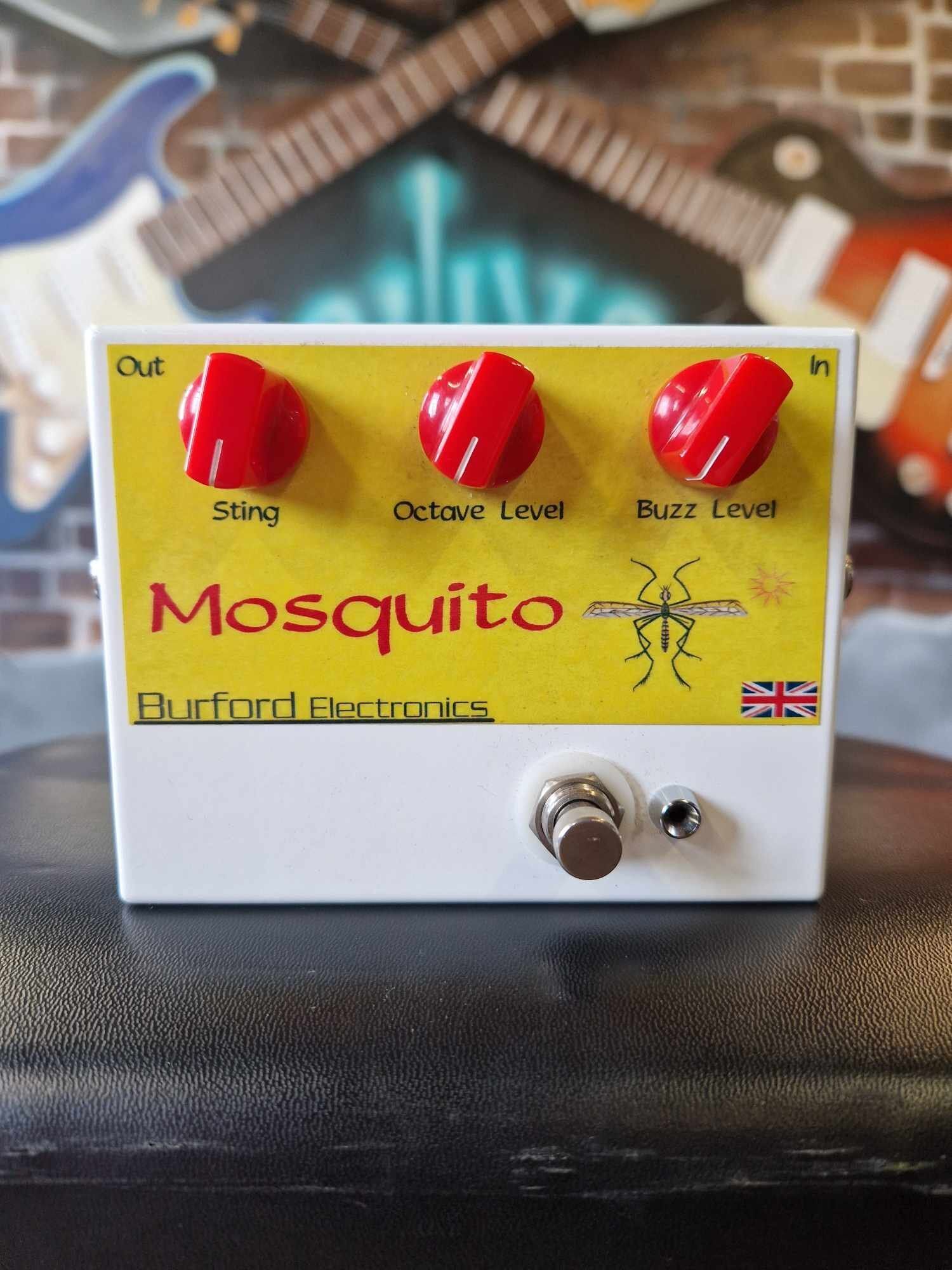
Burford Electronics Mosquito Fuzz Pedal Original - RefurbishedThis is a Burford Electronics Mosquito Fuzz Pedal. The Mosquito is a Fuzz/Octave pedal with a pretty unique sound, being closer to a fuzz more than a distortion this pedal delivers high octane fuzz sounds that will leave a sting. Here's what Burford Electronics say about the Mosquito Pedal: “A unique Octave up fuzz, which will give you pure fuzz on one twist of a knob & octave fuzz on one twist of another knob. So you can have your fuzz setting for a rich body & add octave fuzz to it or turn the fuzz down & just use the octave fuzz control for cutting lead. There is also a control called Sting, this is a tone filter that alters the voice of the octave from sharp to mellow. The octave is not over the top, on the lower register it is quite subtle, you can even play power chords and it holds together extremely well. Without that horrible modulation that is associated with some analogue octave up pedals, even some of the legendary expensive ones. Try soloing somewhere from the 8th fret upwards, it is very responsive and particularly so around 12th/15th fret and even higher. Neck and back pick ups give different sounds. Even playing positions will give different responses.”120,00 £*Shipping: 0,00 £Secure redirect to the provider
-
Keeley Electronics Aurora Digital Reverb Pedal Original - RefurbishedThis is a Keeley Electronics Aurora Reverb guitar effects pedal. Made in the USA, this pedal offers as many different reverb sounds in one pedal as Keeley could manage. As well as having three different reverb styles you get huge control of the Decay, Slapback, warmth and blend meaning you have access to the most inspiring reverb from pristine, fast reflection to ethereal spaces to deep, dark and endless caverns. Here’s what Keeley say about the Aurora; The Keeley Aurora Reverb provides the essentials guitarists are looking for when they need reverb on their pedal boards. Like that ethereal glow to the mighty Earth herself, Aurora creates a natural halo of sound in the atmosphere of your magnificent core tone.100,00 £*Shipping: 0,00 £Secure redirect to the provider



-
Are the Tiger economies emerging markets?
Yes, the Tiger economies are considered emerging markets. The term "Tiger economies" refers to the rapidly growing economies of South Korea, Taiwan, Singapore, and Hong Kong. These countries have experienced rapid industrialization, export-led growth, and technological advancement, leading to significant economic development. While they have made great strides in their economic growth, they are still considered emerging markets due to their ongoing development and potential for further growth and expansion. **
-
What are the similarities between planned and market economies?
Both planned and market economies aim to allocate resources efficiently to meet the needs of the society. Both systems involve the production and distribution of goods and services to fulfill demand. Additionally, both systems involve some level of government intervention, with planned economies having more centralized control and market economies having more decentralized decision-making. Both systems also aim to achieve economic growth and improve the standard of living for their citizens. **
-
What is the difference between emerging economies and developing countries?
Emerging economies refer to countries that are experiencing rapid industrialization and growth, often transitioning from a low-income to a middle-income status. Developing countries, on the other hand, are nations that are still in the early stages of economic development, with lower levels of income, infrastructure, and industrialization. While all emerging economies are developing countries, not all developing countries are considered emerging economies. Emerging economies typically have higher growth rates and more advanced industries compared to developing countries. **
-
Can the economies of Sweden and China be easily compared?
The economies of Sweden and China cannot be easily compared due to their significant differences in size, structure, and development. Sweden has a small, open, and highly developed economy with a focus on innovation, technology, and high-value exports. On the other hand, China has a large, diverse, and rapidly growing economy with a focus on manufacturing, infrastructure development, and export-led growth. Additionally, Sweden has a strong welfare state and high levels of income equality, while China has a more diverse income distribution and a different approach to social welfare. Overall, the differences in size, structure, and development make it challenging to directly compare the economies of Sweden and China. **

What is the difference between developing countries and emerging economies?
Developing countries and emerging economies are often used interchangeably, but there is a subtle difference between the two. Developing countries typically refer to nations with low levels of industrialization, low per capita income, and high poverty rates. On the other hand, emerging economies are countries that are experiencing rapid economic growth, industrialization, and modernization, and are moving towards becoming developed nations. Emerging economies often have higher levels of foreign direct investment, infrastructure development, and technological advancement compared to developing countries. **
What are the advantages and disadvantages of barter and monetary economies?
Barter economies allow for the direct exchange of goods and services without the need for a common medium of exchange, which can be advantageous in a situation where there is a lack of currency or a stable monetary system. However, barter economies can be inefficient and time-consuming, as finding someone who has what you need and also wants what you have can be challenging. On the other hand, monetary economies provide a widely accepted medium of exchange, making transactions more convenient and efficient. However, they can also lead to issues such as inflation, economic inequality, and the potential for financial crises. **
Top-Angebote
Products related to Economies:
-
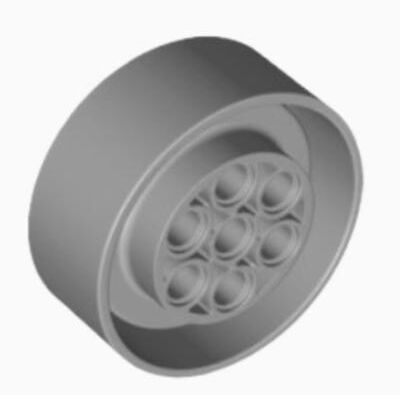
Lush Living Finds Perforated Brick Assembly Toy Accessories With Technology Mechanical Wheels Perforated Brick Assembly Toy Accessories With Technology Mechanical WheelsEnhance Creativity with Technology Mechanical Wheels Unlock the power of innovation with our technology mechanical wheels, designed specifically for perforated brick assembly toy accessories. Whether you are a hobbyist or a seasoned builder, these...43,97 $*Shipping: 0,00 $Secure redirect to the provider
-
Klutz: LEGO GadgetsThis activity kit will have you building 11 machines including a gravity powered car and a wacky boxing robot. The fun doesn't stop once you've completed all of the projects in the book - open-ended prompts will inspire you to continue experimenting...24,99 $*Shipping: 0,00 $Secure redirect to the provider
-
Multisell Products Hub Magnetic Bottle Opener For Household Mineral Water Plastic Beverage Bottles And Cap Opening, Kitchen Accessories Gadgets blueEffortless Cap Opening for Everyday Kitchens Upgrade your routine with this 1 pcs Kitchen Accessories Gadgets Magnetic Bottle Opener for Household Mineral Water Plastic Beverage Bottles and Cap Opening designed for convenience and comfort. It makes...34,97 $*Shipping: 0,00 $Secure redirect to the provider
-
HARPERCOLLINS Creative Confidence by Tom & David Kelley – Unleashing Your Creative Potential & Innovation MindsetA powerful and inspiring book from the founders of IDEO, the award-winning design firm, on unleashing the creativity that lies within each and every one of us. Too often, companies and individuals assume that creativity and innovation are the domain of the ‘creative types’. But two of the foremost experts in innovation, design and creativity on the planet show us that each and every one of us is creative. In an entertaining and inspiring narrative that draws on countless stories from their work at IDEO, and with many of the world's top companies and design firms, David and Tom Kelley identify the principles and strategies that will allow us to tap into our creative potential in our work lives, and in our personal lives, allow us to think outside the box in terms of how we approach and solve problems. ‘Creative Confidence’ is a book that will help each of us be more productive and successful in our lives and in our careers.4,95 £*Shipping: 1,99 £Secure redirect to the provider
-
What is the difference between Economies of Scale and Economies of Scope?
Economies of scale refer to the cost advantages that a business can achieve as it increases its level of production. This can result from factors such as spreading fixed costs over a larger output, bulk purchasing discounts, and more efficient use of resources. On the other hand, economies of scope refer to the cost advantages that arise from producing a variety of products or services together, rather than just one. This can result from shared resources, such as marketing and distribution channels, as well as the ability to leverage a company's core competencies across multiple products or services. **
-
What are the Tiger economies?
The Tiger economies refer to the highly developed and industrialized economies of East Asia, including South Korea, Taiwan, Singapore, and Hong Kong. These countries experienced rapid economic growth and industrialization in the latter half of the 20th century, transforming from agrarian-based economies to industrial powerhouses. The term "Tiger economies" is derived from the "Four Asian Tigers," which originally referred to South Korea, Taiwan, Singapore, and Hong Kong, but has since been expanded to include other rapidly developing economies in the region. These countries are known for their export-oriented growth strategies, strong manufacturing sectors, and high levels of technological innovation. **
-
Are the Tiger economies emerging markets?
Yes, the Tiger economies are considered emerging markets. The term "Tiger economies" refers to the rapidly growing economies of South Korea, Taiwan, Singapore, and Hong Kong. These countries have experienced rapid industrialization, export-led growth, and technological advancement, leading to significant economic development. While they have made great strides in their economic growth, they are still considered emerging markets due to their ongoing development and potential for further growth and expansion. **
-
What are the similarities between planned and market economies?
Both planned and market economies aim to allocate resources efficiently to meet the needs of the society. Both systems involve the production and distribution of goods and services to fulfill demand. Additionally, both systems involve some level of government intervention, with planned economies having more centralized control and market economies having more decentralized decision-making. Both systems also aim to achieve economic growth and improve the standard of living for their citizens. **
Similar search terms for Economies
-
Burford Electronics Mosquito Fuzz Pedal Original - RefurbishedThis is a Burford Electronics Mosquito Fuzz Pedal. The Mosquito is a Fuzz/Octave pedal with a pretty unique sound, being closer to a fuzz more than a distortion this pedal delivers high octane fuzz sounds that will leave a sting. Here's what Burford Electronics say about the Mosquito Pedal: “A unique Octave up fuzz, which will give you pure fuzz on one twist of a knob & octave fuzz on one twist of another knob. So you can have your fuzz setting for a rich body & add octave fuzz to it or turn the fuzz down & just use the octave fuzz control for cutting lead. There is also a control called Sting, this is a tone filter that alters the voice of the octave from sharp to mellow. The octave is not over the top, on the lower register it is quite subtle, you can even play power chords and it holds together extremely well. Without that horrible modulation that is associated with some analogue octave up pedals, even some of the legendary expensive ones. Try soloing somewhere from the 8th fret upwards, it is very responsive and particularly so around 12th/15th fret and even higher. Neck and back pick ups give different sounds. Even playing positions will give different responses.”120,00 £*Shipping: 0,00 £Secure redirect to the provider
-
Keeley Electronics Aurora Digital Reverb Pedal Original - RefurbishedThis is a Keeley Electronics Aurora Reverb guitar effects pedal. Made in the USA, this pedal offers as many different reverb sounds in one pedal as Keeley could manage. As well as having three different reverb styles you get huge control of the Decay, Slapback, warmth and blend meaning you have access to the most inspiring reverb from pristine, fast reflection to ethereal spaces to deep, dark and endless caverns. Here’s what Keeley say about the Aurora; The Keeley Aurora Reverb provides the essentials guitarists are looking for when they need reverb on their pedal boards. Like that ethereal glow to the mighty Earth herself, Aurora creates a natural halo of sound in the atmosphere of your magnificent core tone.100,00 £*Shipping: 0,00 £Secure redirect to the provider
-
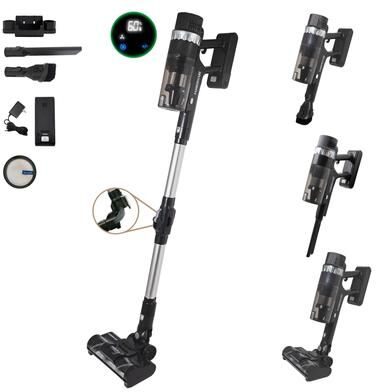
Farberware Cordless Platinum Stick Vacuum Cleaner, Smart Sensor Technology for Carpet and Hard Floors, Bendable DesignFarberware Cordless Platinum Stick Vacuum Cleaner, Smart Sensor Technology for Carpet and Hard Floors, Bendable Design, Converts to Handheld Vacuum Description: Life is messy, but with Farberware’s Cordless Platinum Stick Vacuum, you can tackle every…147,49 $*Shipping: 0,00 $Secure redirect to the provider
-
What is the difference between emerging economies and developing countries?
Emerging economies refer to countries that are experiencing rapid industrialization and growth, often transitioning from a low-income to a middle-income status. Developing countries, on the other hand, are nations that are still in the early stages of economic development, with lower levels of income, infrastructure, and industrialization. While all emerging economies are developing countries, not all developing countries are considered emerging economies. Emerging economies typically have higher growth rates and more advanced industries compared to developing countries. **
-
Can the economies of Sweden and China be easily compared?
The economies of Sweden and China cannot be easily compared due to their significant differences in size, structure, and development. Sweden has a small, open, and highly developed economy with a focus on innovation, technology, and high-value exports. On the other hand, China has a large, diverse, and rapidly growing economy with a focus on manufacturing, infrastructure development, and export-led growth. Additionally, Sweden has a strong welfare state and high levels of income equality, while China has a more diverse income distribution and a different approach to social welfare. Overall, the differences in size, structure, and development make it challenging to directly compare the economies of Sweden and China. **
-
What is the difference between developing countries and emerging economies?
Developing countries and emerging economies are often used interchangeably, but there is a subtle difference between the two. Developing countries typically refer to nations with low levels of industrialization, low per capita income, and high poverty rates. On the other hand, emerging economies are countries that are experiencing rapid economic growth, industrialization, and modernization, and are moving towards becoming developed nations. Emerging economies often have higher levels of foreign direct investment, infrastructure development, and technological advancement compared to developing countries. **
-
What are the advantages and disadvantages of barter and monetary economies?
Barter economies allow for the direct exchange of goods and services without the need for a common medium of exchange, which can be advantageous in a situation where there is a lack of currency or a stable monetary system. However, barter economies can be inefficient and time-consuming, as finding someone who has what you need and also wants what you have can be challenging. On the other hand, monetary economies provide a widely accepted medium of exchange, making transactions more convenient and efficient. However, they can also lead to issues such as inflation, economic inequality, and the potential for financial crises. **
* All prices are inclusive of VAT and, if applicable, plus shipping costs. The offer information is based on the details provided by the respective shop and is updated through automated processes. Real-time updates do not occur, so deviations can occur in individual cases. ** Note: Parts of this content were created by AI.