Buy miaxl.com ?
We are moving the project
miaxl.com .
Are you interested in purchasing the domain
miaxl.com ?
domain@kv-gmbh.de · 0541-91531010
Buy miaxl.com ?
Is Febi Bilstein a good brand for timing belt replacement?
Febi Bilstein is a reputable brand known for producing high-quality automotive parts, including timing belts. Their timing belts are designed to meet or exceed OEM specifications, making them a reliable choice for replacement. Customers have reported positive experiences with Febi Bilstein timing belts, citing their durability and performance. Overall, Febi Bilstein is considered a good brand for timing belt replacement due to their quality products and reputation in the automotive industry. **
What is sensor technology and communication?
Sensor technology refers to the use of sensors to detect and measure physical properties such as temperature, pressure, light, and motion. These sensors can then communicate this information to other devices or systems through various communication methods such as wired connections, wireless signals, or the internet. This allows for real-time monitoring and control of physical environments, enabling applications in areas such as smart homes, industrial automation, healthcare, and environmental monitoring. Overall, sensor technology and communication play a crucial role in enabling the collection and transmission of data for various applications, ultimately leading to improved efficiency, safety, and convenience. **

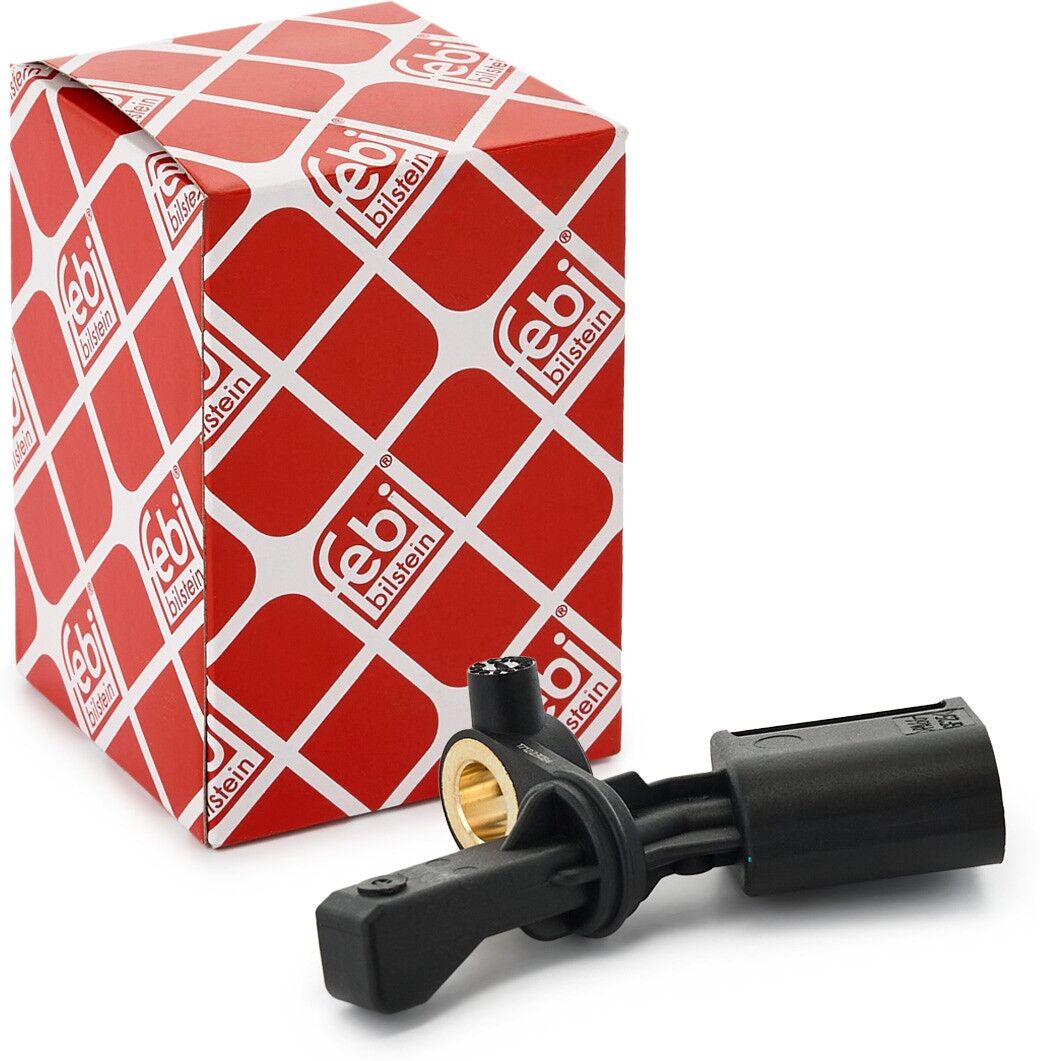
Similar search terms for FEBI-BILSTEIN-198434-Sensor
Top-Angebote
Products related to FEBI-BILSTEIN-198434-Sensor:
-
FEBI BILSTEIN 23808 ABS sensorPaired product: 23810; Number of connectors: 2; Fitting Position: Rear Axle Right; Weight [kg]: 0,130; for OE number: WHT 003 858; Vehicle Equipment: for vehicles without park assist (parallel parking); for PR number: 7X0, 7X1, 7X7, 7X9, 7X4, 7X8, 0N0; TecDoc Engine Number: 22691, 22469, 24839, 26695, 20792, 20795, 23859, 23858, 16871, 20712, 20711, 17352, 16872, 17404, 18201, 18199, 18200, 17405, 17025, 23938, 20828, 17450, 19199, 22663, 20714, 22170, 20704, 18540, 18883, 18541, 17986, 18469, 18468, 18134, 18222, 20780, 18223, 17357, 20732, 22674, 18977, 18471, 18246, 18245, 19819, 18268, 20190, 24325, 20710, 20673, 20522, 20793, 22641, 22640, 20855, 16862, 20606, 22452, 20734, 20900, 24834, 20799, 24215, 27857, 30928, 17048; Construction Year to: 10/2011, 11/2010; Engine Code: BKD; CFHC, CBDB; CFHC; CJAA; Axle: Multi-link Axle10,99 £*Shipping: 8,45 £Secure redirect to the provider
-
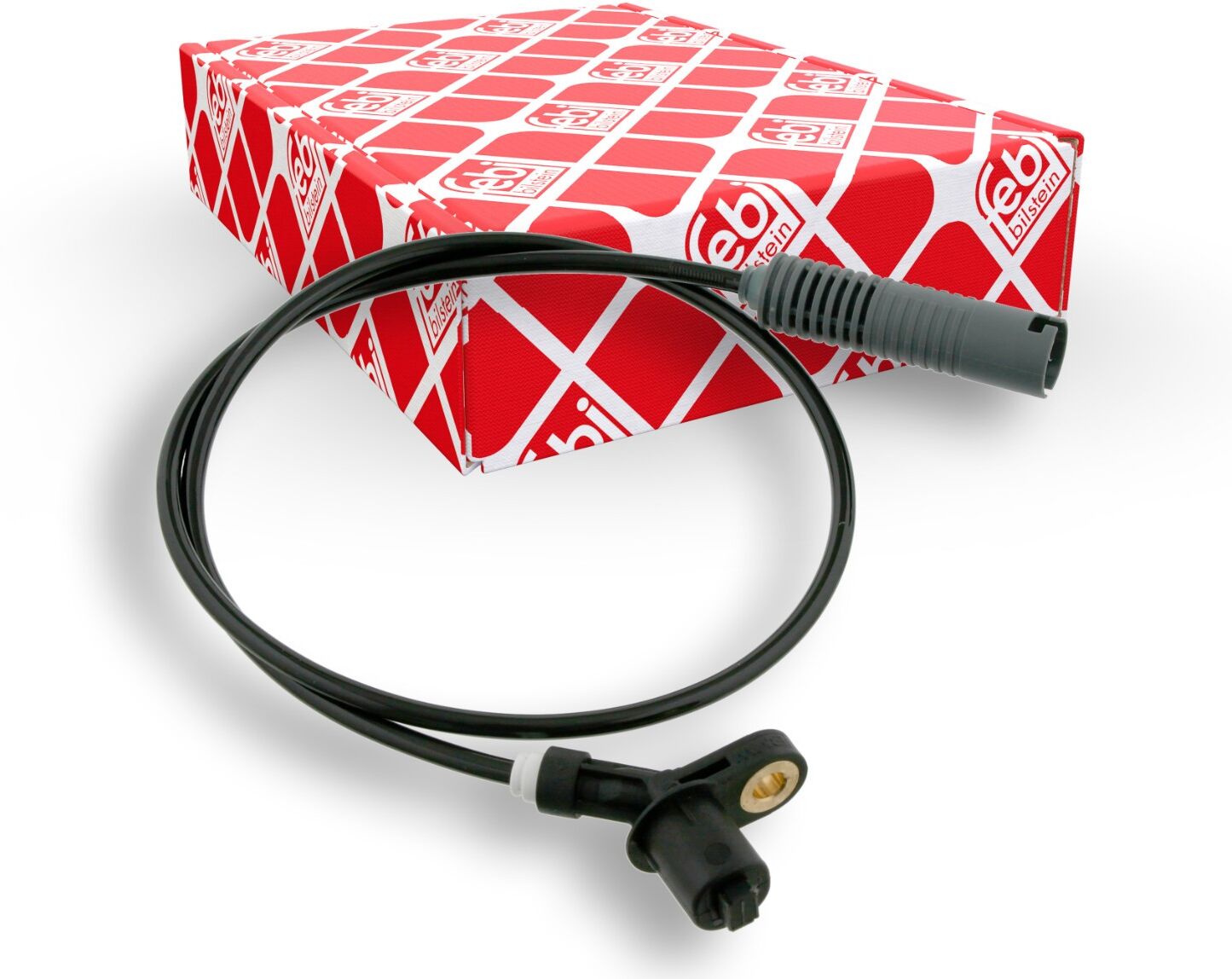
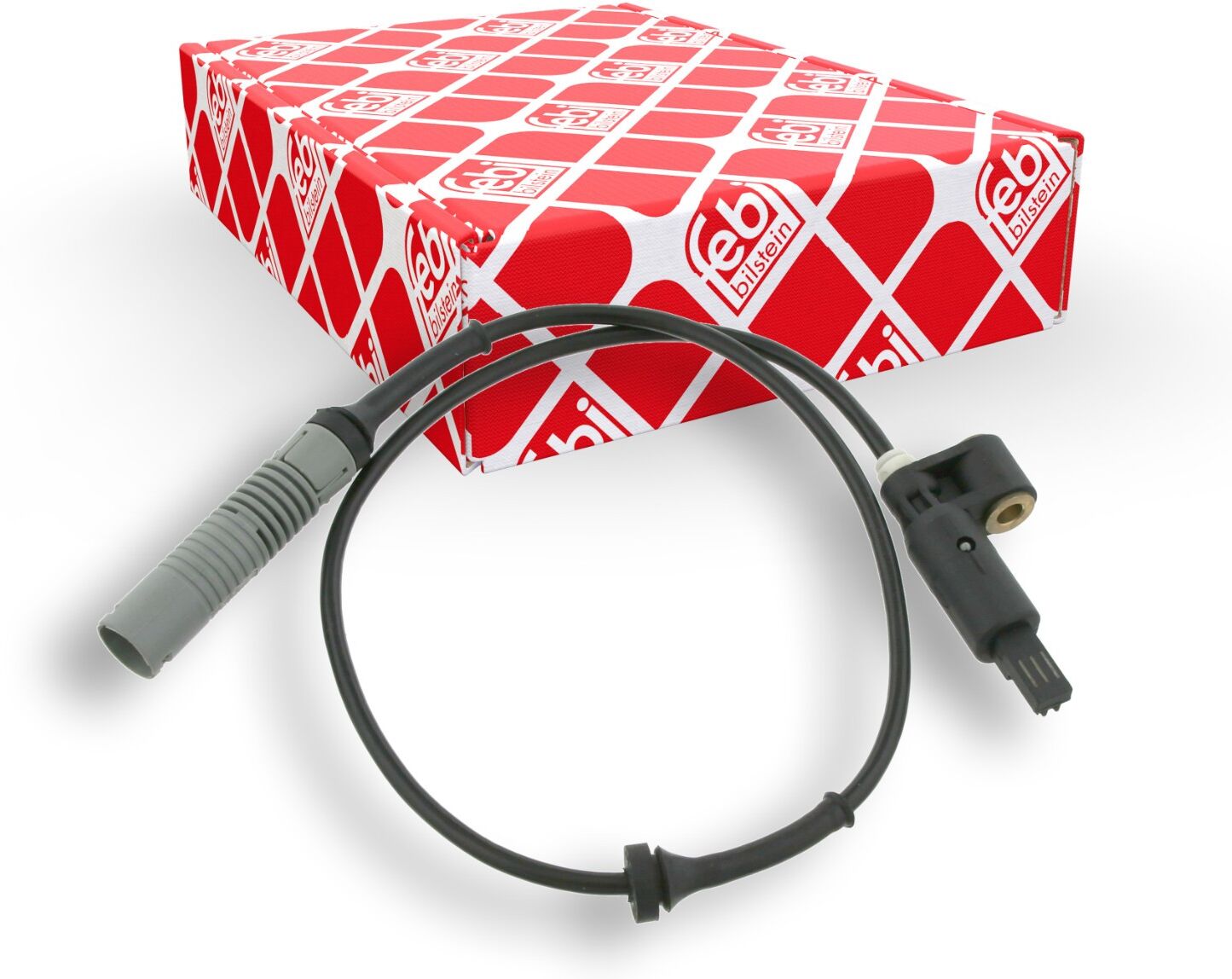
FEBI BILSTEIN 24129 ABS sensorNumber of connectors: 2; Fitting Position: Rear Axle Left, Rear Axle Right; Cable Length [mm]: 1000; Weight [kg]: 0,085; for OE number: 34 52 1 164 652; Construction Year to: 09/2000, 09/2001; Braking/Driving Dynamics: for vehicles with DSC, for vehicles without DSC17,99 £*Shipping: 8,45 £Secure redirect to the provider
-
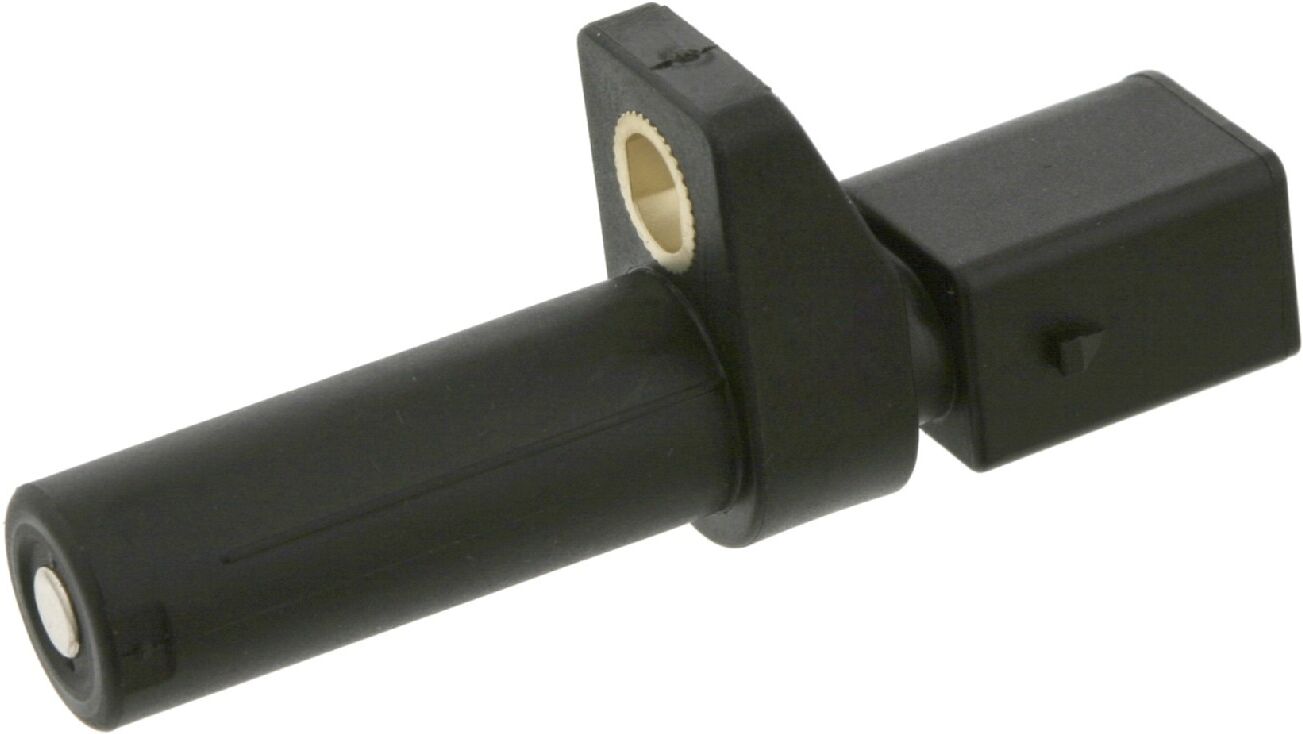
FEBI BILSTEIN 24345 Crankshaft sensorLength [mm]: 76; Width [mm]: 31; Thickness: 18; Number of connectors: 2; Weight [kg]: 0,032; for OE number: 003 153 95 28; Engine Number from: 006909, 084643; Transmission Type: Manual Transmission, Automatic Transmission; Country Specific Design: USA, Japan; Engine Number to: 30 370998, 31 000000, 30370998, 30 039709, 60 002692, 60 002420, 30 358406; not for emissions standard: Euro 3 (D3), Euro 3; Engine Code: 160910; TecDoc Engine Number: 2610226,99 £*Shipping: 8,45 £Secure redirect to the provider


-
How does the measurement technology of a temperature sensor with NTC work?
A temperature sensor with NTC (Negative Temperature Coefficient) works by utilizing a thermistor made of a semiconductor material that exhibits a decrease in resistance as temperature increases. The NTC thermistor is connected to a circuit that measures the resistance of the thermistor, which changes with temperature. By measuring the resistance, the circuit can calculate the temperature based on the known characteristics of the NTC thermistor. This allows the sensor to provide an accurate temperature reading based on the electrical resistance of the NTC thermistor. **
-
Is the sensor of my Nikon D5100 a full-frame sensor?
No, the sensor of the Nikon D5100 is not a full-frame sensor. It is an APS-C sized sensor, which is smaller than a full-frame sensor. This means that the field of view captured by the sensor is narrower compared to a full-frame sensor, resulting in a crop factor of approximately 1.5x for Nikon DX format cameras like the D5100. **
-
How can the NXT color sensor and light sensor be programmed?
The NXT color sensor and light sensor can be programmed using the NXT-G programming software, which allows users to create custom programs for the sensors. The software provides a range of pre-built blocks that can be used to control and read data from the sensors, making it easy to create complex behaviors. Additionally, the sensors can be programmed using other programming languages such as RobotC or Java, which provide more advanced capabilities for controlling and processing sensor data. Overall, the NXT color sensor and light sensor can be programmed using a variety of tools and languages to suit the needs of the user. **
-
What is the light sensor and what is the rain sensor?
A light sensor is a device that detects the presence or absence of light. It measures the intensity of light in its surroundings and can be used to automatically adjust lighting levels in response to changing light conditions. On the other hand, a rain sensor is a device that detects the presence of rain or moisture. It is commonly used in automated irrigation systems to prevent watering when it is raining, conserving water and preventing overwatering of plants. **

Which sensor is this?
This is a photoelectric sensor. It uses a light emitter and a receiver to detect the presence or absence of an object. When the emitted light is interrupted by an object, the sensor detects the change and triggers a response, such as turning on a light or stopping a conveyor belt. Photoelectric sensors are commonly used in industrial automation, packaging, and material handling applications. **
Inductive or Hall sensor?
The choice between an inductive sensor and a Hall sensor depends on the specific application and requirements. Inductive sensors are typically used for non-contact detection of metallic objects and are suitable for harsh industrial environments due to their robustness. On the other hand, Hall sensors are used for detecting the presence of magnetic fields and are often used in applications such as position sensing and speed detection. Ultimately, the decision between the two sensors should be based on the specific needs of the application, including the type of target object and the environmental conditions. **
Top-Angebote
Products related to FEBI-BILSTEIN-198434-Sensor:
-
FEBI BILSTEIN 23804 ABS sensorPaired product: 23806; Number of connectors: 2; Fitting Position: Rear Axle Right; Weight [kg]: 0,010; for OE number: WHT 003 862; Construction Year from: 11/2012, 09/2011, 08/2011; TecDoc Engine Number: 35799, 26238, 25747, 25749, 25704, 24980, 24981, 20810, 20802, 20801, 20811, 20803, 24043, 20806, 19090, 23524, 20809, 23138, 20839, 22639, 22671, 23610, 20807, 30928, 19089; Country Specific Design: Central America, South America; for PR number: 1AC, 0N3, 0N4, 1AT; Axle: not for multi-link axle; Construction Year to: 01/2021, 08/20216,29 £*Shipping: 8,45 £Secure redirect to the provider
-
FEBI BILSTEIN 23808 ABS sensorPaired product: 23810; Number of connectors: 2; Fitting Position: Rear Axle Right; Weight [kg]: 0,130; for OE number: WHT 003 858; Vehicle Equipment: for vehicles without park assist (parallel parking); for PR number: 7X0, 7X1, 7X7, 7X9, 7X4, 7X8, 0N0; TecDoc Engine Number: 22691, 22469, 24839, 26695, 20792, 20795, 23859, 23858, 16871, 20712, 20711, 17352, 16872, 17404, 18201, 18199, 18200, 17405, 17025, 23938, 20828, 17450, 19199, 22663, 20714, 22170, 20704, 18540, 18883, 18541, 17986, 18469, 18468, 18134, 18222, 20780, 18223, 17357, 20732, 22674, 18977, 18471, 18246, 18245, 19819, 18268, 20190, 24325, 20710, 20673, 20522, 20793, 22641, 22640, 20855, 16862, 20606, 22452, 20734, 20900, 24834, 20799, 24215, 27857, 30928, 17048; Construction Year to: 10/2011, 11/2010; Engine Code: BKD; CFHC, CBDB; CFHC; CJAA; Axle: Multi-link Axle10,99 £*Shipping: 8,45 £Secure redirect to the provider
-
Is Febi Bilstein a good brand for timing belt replacement?
Febi Bilstein is a reputable brand known for producing high-quality automotive parts, including timing belts. Their timing belts are designed to meet or exceed OEM specifications, making them a reliable choice for replacement. Customers have reported positive experiences with Febi Bilstein timing belts, citing their durability and performance. Overall, Febi Bilstein is considered a good brand for timing belt replacement due to their quality products and reputation in the automotive industry. **
-
What is sensor technology and communication?
Sensor technology refers to the use of sensors to detect and measure physical properties such as temperature, pressure, light, and motion. These sensors can then communicate this information to other devices or systems through various communication methods such as wired connections, wireless signals, or the internet. This allows for real-time monitoring and control of physical environments, enabling applications in areas such as smart homes, industrial automation, healthcare, and environmental monitoring. Overall, sensor technology and communication play a crucial role in enabling the collection and transmission of data for various applications, ultimately leading to improved efficiency, safety, and convenience. **
-
How does the measurement technology of a temperature sensor with NTC work?
A temperature sensor with NTC (Negative Temperature Coefficient) works by utilizing a thermistor made of a semiconductor material that exhibits a decrease in resistance as temperature increases. The NTC thermistor is connected to a circuit that measures the resistance of the thermistor, which changes with temperature. By measuring the resistance, the circuit can calculate the temperature based on the known characteristics of the NTC thermistor. This allows the sensor to provide an accurate temperature reading based on the electrical resistance of the NTC thermistor. **
-
Is the sensor of my Nikon D5100 a full-frame sensor?
No, the sensor of the Nikon D5100 is not a full-frame sensor. It is an APS-C sized sensor, which is smaller than a full-frame sensor. This means that the field of view captured by the sensor is narrower compared to a full-frame sensor, resulting in a crop factor of approximately 1.5x for Nikon DX format cameras like the D5100. **
Similar search terms for FEBI-BILSTEIN-198434-Sensor
-
FEBI BILSTEIN 24129 ABS sensorNumber of connectors: 2; Fitting Position: Rear Axle Left, Rear Axle Right; Cable Length [mm]: 1000; Weight [kg]: 0,085; for OE number: 34 52 1 164 652; Construction Year to: 09/2000, 09/2001; Braking/Driving Dynamics: for vehicles with DSC, for vehicles without DSC17,99 £*Shipping: 8,45 £Secure redirect to the provider
-
FEBI BILSTEIN 24345 Crankshaft sensorLength [mm]: 76; Width [mm]: 31; Thickness: 18; Number of connectors: 2; Weight [kg]: 0,032; for OE number: 003 153 95 28; Engine Number from: 006909, 084643; Transmission Type: Manual Transmission, Automatic Transmission; Country Specific Design: USA, Japan; Engine Number to: 30 370998, 31 000000, 30370998, 30 039709, 60 002692, 60 002420, 30 358406; not for emissions standard: Euro 3 (D3), Euro 3; Engine Code: 160910; TecDoc Engine Number: 2610226,99 £*Shipping: 8,45 £Secure redirect to the provider
-
FEBI BILSTEIN 22893 Crankshaft sensorLength [mm]: 285; Number of connectors: 2; Weight [kg]: 0,060; for OE number: 77 00 855 719; TecDoc Engine Number: 3176, 3275, 4858, 4876, 3194, 3197, 16274, 16275, 5521, 18178, 16276, 3191; Construction Year to: 03/1997, 09/1997, 06/1997; Construction Year from: 01/199620,49 £*Shipping: 8,45 £Secure redirect to the provider
-
FEBI BILSTEIN 23399 ABS sensorNumber of connectors: 3; Fitting Position: Front Axle Left, Front Axle Right; Cable Length [mm]: 575; Weight [kg]: 0,081; Braking/Driving Dynamics: for vehicles without DSC; Construction Year to: 09/2000; Construction Year from: 09/200015,49 £*Shipping: 8,45 £Secure redirect to the provider
-
How can the NXT color sensor and light sensor be programmed?
The NXT color sensor and light sensor can be programmed using the NXT-G programming software, which allows users to create custom programs for the sensors. The software provides a range of pre-built blocks that can be used to control and read data from the sensors, making it easy to create complex behaviors. Additionally, the sensors can be programmed using other programming languages such as RobotC or Java, which provide more advanced capabilities for controlling and processing sensor data. Overall, the NXT color sensor and light sensor can be programmed using a variety of tools and languages to suit the needs of the user. **
-
What is the light sensor and what is the rain sensor?
A light sensor is a device that detects the presence or absence of light. It measures the intensity of light in its surroundings and can be used to automatically adjust lighting levels in response to changing light conditions. On the other hand, a rain sensor is a device that detects the presence of rain or moisture. It is commonly used in automated irrigation systems to prevent watering when it is raining, conserving water and preventing overwatering of plants. **
-
Which sensor is this?
This is a photoelectric sensor. It uses a light emitter and a receiver to detect the presence or absence of an object. When the emitted light is interrupted by an object, the sensor detects the change and triggers a response, such as turning on a light or stopping a conveyor belt. Photoelectric sensors are commonly used in industrial automation, packaging, and material handling applications. **
-
Inductive or Hall sensor?
The choice between an inductive sensor and a Hall sensor depends on the specific application and requirements. Inductive sensors are typically used for non-contact detection of metallic objects and are suitable for harsh industrial environments due to their robustness. On the other hand, Hall sensors are used for detecting the presence of magnetic fields and are often used in applications such as position sensing and speed detection. Ultimately, the decision between the two sensors should be based on the specific needs of the application, including the type of target object and the environmental conditions. **
* All prices are inclusive of VAT and, if applicable, plus shipping costs. The offer information is based on the details provided by the respective shop and is updated through automated processes. Real-time updates do not occur, so deviations can occur in individual cases. ** Note: Parts of this content were created by AI.